Saturday, 3 January 2015

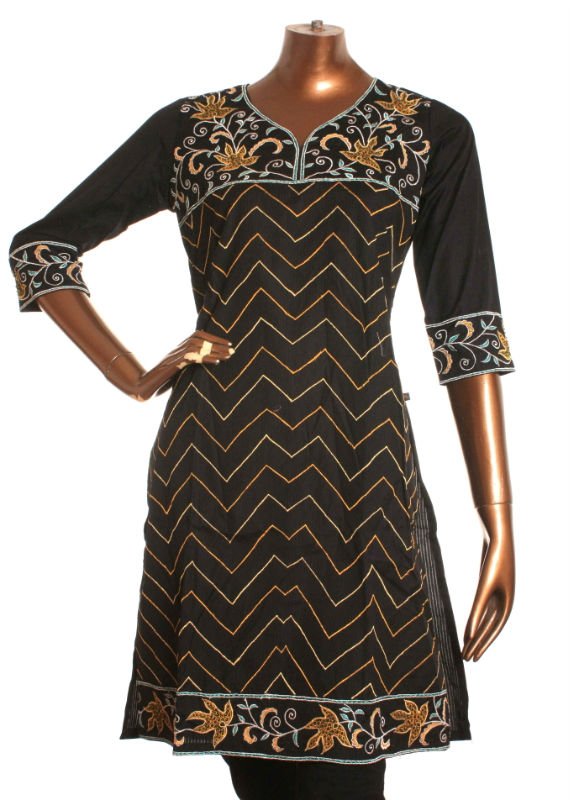
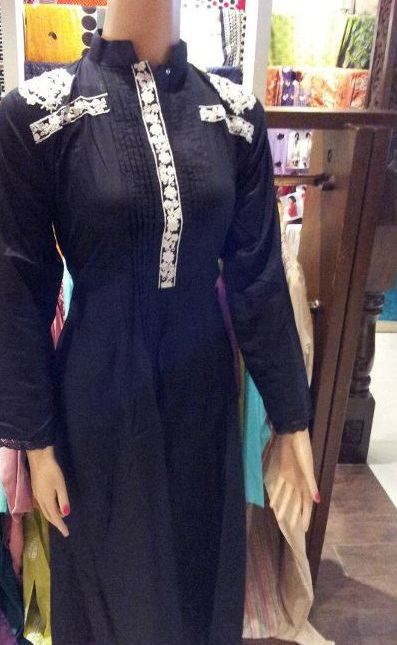
Ladies Kurta Online Ladies Kurta Neck Design Images Style Neck Designs Collection Images Photos

Ladies Kurta Online Biography

Source:-Google.com.pk

The word "kurta" is a borrowing from Hindustani, and originally from Persian and was first used in English in the 20th century. Kurta is a piece of clothing worn by males, it is usually worn for fashion, tradition and culture. As the Thawb is encouraged to be worn in Saudi Arabia, Pakistani and Indian expatriates rather prefer to wear the Kurta as a close and same version to the Arab clothing.


A kurta worn by females is called a kurti. The kurta is variously known as an angarkha in Gujarat and Rajasthan and a Panjabi in Bengal, Bangladesh and Assam,The term kurta, pronounced ‎, is a generic term used in South Asia for several forms of upper garments for men and women, with regional variations of form.

A kurta is a traditional item of clothing worn in Pakistan, India, Nepal, Bangladesh, and Sri Lanka. It is a loose shirt falling either just above or somewhere below the knees of the wearer, and is worn by men. They were traditionally worn with loose-fitting paijama, loose-fitting shalwars, semi-tight (loose from the waist to the knees, and tight from the calves to the ankles churidars, or wrapped-around dhotis but are now also worn with jeans. Kurtas are worn both as casual everyday wear and as formal dress.
Women wear kurtis as blouses, usually over jeans. These kurtis are typically much shorter than the traditional garments and made with a lighter materials, Imported kurtas were fashionable in the United States in the 1960s and 1970s, as an element of hippie fashion, fell from favor briefly, and are now again fashionable. South Asian women may also wear this Western adaptation of South Asian fashion.
Formal kurtas are usually custom-made by South Asian tailors, who work with the fabric their customers bring them. South Asians overseas and Westerners, can buy them at South Asian clothing stores or order them from web retailers.The front and back pieces of a simple kurta are also rectangular. The side seams are left open for 6-12 inches above the hem, which gives the wearer some ease of movement.

The kurta usually opens in the front; some styles, however, button at the shoulder seam. The front opening is often a hemmed slit in the fabric, tied or buttoned at the top; some kurtas, however, have plackets rather than slits. The opening may be centered on the chest, or positioned off center.South Asian tailors command a vast repertoire of methods, traditional and modern, for decorating fabric. It is likely that all of them have been used, at one time or another, to decorate kurtas. However, the most common decoration is embroidery. Many light summer kurtas feature Chikan embroidery, a speciality of Lucknow, around the hems and front opening. This embroidery is typically executed on light, semi-transparent fabric in a matching thread. The Ladies kurtas blouses, among with leggings are most popular in India, Pakistan, Singapore and Malaysia. Especially 46 inch long length kurta are popular in 2013. Major production of regular wear ladies kurta are at Mumbai, Delhi, Ahemdabad India. Modern leggings are typically made from a blend of lycra fabrics and manufactured in city of India known as Tirupur.citation In India, Kurta is a very popular dress among the political class. Almost all the politicians are seen wearing a crisp white kurta made from khadi. Kurta also reflects India's culture and tradition. On any auspicious day or festivals, people are seen wearing colorful kurtas. Sometimes, kurtas having collars are also worn.is ornate but subtle.those used in sewing kameez.
Ladies Kurta Online Ladies Kurta Neck Design Images Style Neck Designs Collection Images Photos

Ladies Kurta Online Ladies Kurta Neck Design Images Style Neck Designs Collection Images Photos
 
Ladies Kurta Online Ladies Kurta Neck Design Images Style Neck Designs Collection Images Photos
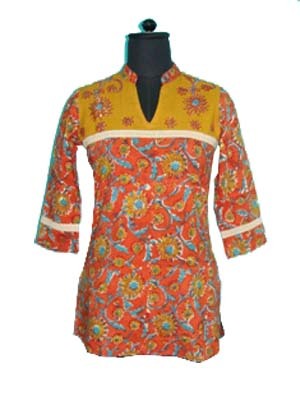
Ladies Kurta Online Ladies Kurta Neck Design Images Style Neck Designs Collection Images Photos 
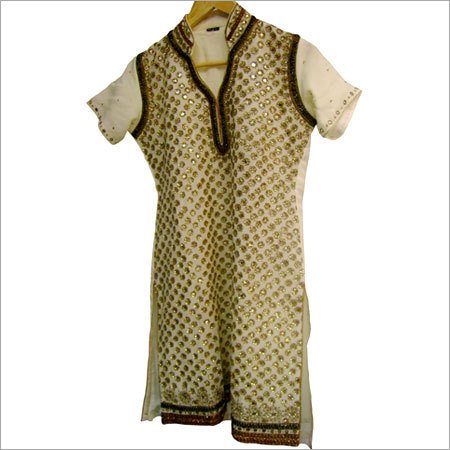
Friday, 2 January 2015

Ladies Kurta UK Ladies Kurta Neck Design Images Style Neck Designs Collection Images Photos

Ladies Kurta UK Biography

Source:- Google.com.pk 

Imported kurtas were fashionable in the United States in the 1960s and 1970s, as an element of hippie fashion, fell from favor briefly, and are now again fashionable. South Asian women may also wear this Western adaptation of South Asian fashion. Formal kurtas are usually custom-made by South Asian tailors, who work with the fabric their customers bring them. South Asians overseas and Westerners, can buy them at South Asian clothing stores or order them from web retailers. A traditional kurta consists of rectangular fabric pieces with perhaps a few gusset inserts, and is cut so as to leave no wasted fabric. The cut is usually simple, although decorative treatments can be elaborate. 

A kurta worn by females is called a kurti. The kurta is variously known as an angarkha in Gujarat and Rajasthan and a Panjabi in Bengal, Bangladesh and Assam. It is a traditional dress for men in Central, West and South Asia. It is a long shirt worn in whole of Afghanistan, Pakistan, Iran and Northern Indian states namely, Jammu and Kashmir, Punjab, Haryana, Uttar Pradesh, Bihar, Himachal Pradesh, Uttarakhand and Rajasthan. A similar dress is worn traditionally in Gujarat is somewhat shorter in length than a usual Kurta and has a wider end similar to lower part of a Ghagra. In India, Hindus wear it along with Dhoti or Paijama whereas Muslims wear it along with Shalwar or Paijama. Among young boys it is common to wear Kurta with Jeans.Women wear kurtis as blouses, usually over jeans.These kurtis are typically much shorter than the traditional garments and made with a lighter materials, like those used in sewing kameez.  

The sleeves of a traditional kurta fall straight to the wrist; they do not narrow, as do many Western-cut sleeves. Sleeves are not cuffed, just hemmed and decorated. The front and back pieces of a simple kurta are also rectangular. The side seams are left open for 6-12 inches above the hem, which gives the wearer some ease of movement. The kurta usually opens in the front; some styles, however, button at the shoulder seam. The front opening is often a hemmed slit in the fabric, tied or buttoned at the top; some kurtas, however, have plackets rather than slits. The opening may be centered on the chest, or positioned off center. 

A traditional kurta does not have a collar. Modern variants may feature stand-up collars of the type known to tailors and seamstresses as "mandarin" collars. These are the same sort of collars seen on achkans, sherwanis, and Nehru jackets. Indian subcontinent has a very popular styling of Mukatsari kurta (getting its origin from the province of Mukatsar in Punjab (India) which is famous for its slim fitting cuts and smart fit designs. It is very popular among young politicians. Kurtas are typically fastened with tasseled ties, cloth balls and loops, or buttons. Ready-made kurtas often avoid the use of horn buttons, in deference to Hindu sentiments; such buttons are frequently made from cow or buffalo hooves or horns. Buttons are often wood or plastic. Kurtas worn on formal occasions might feature decorative metal buttons, which are not sewn to the fabric, but, like cufflinks, are fastened into the cloth when needed. Such buttons can be decorated with jewels, enameling, and other traditional jewelers' techniques.
Ladies Kurta UK Ladies Kurta Neck Design Images Style Neck Designs Collection Images Photos
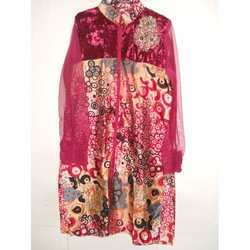

Ladies Kurta Style Ladies Kurta Neck Design Images Style Neck Designs Collection Images Photos

Ladies Kurta Style Biography

Source:- Google.com.pk 

A kurta worn by females is called a kurti. The kurta is variously known as an angarkha in Gujarat and Rajasthan and a Panjabi in Bengal, Bangladesh and Assam. It is a traditional dress for men in Central, West and South Asia. It is a long shirt worn in whole of Afghanistan, Pakistan, Iran and Northern Indian states namely, Jammu and Kashmir, Punjab, Haryana, Uttar Pradesh, Bihar, Himachal Pradesh, Uttarakhand and Rajasthan. A similar dress is worn traditionally in Gujarat is somewhat shorter in length than a usual Kurta and has a wider end similar to lower part of a Ghagra. In India, Hindus wear it along with Dhoti or Pajama whereas Muslims wear it along with Shalwar or Paijama. Among young boys it is common to wear Kurta with Jeans.Women wear kurtis as blouses, usually over jeans.These kurtis are typically much shorter than the traditional garments and made with a lighter materials, like those used in sewing kameez.

Imported kurtas were fashionable in the United States in the 1960s and 1970s, as an element of hippie fashion, fell from favor briefly, and are now again fashionable. South Asian women may also wear this Western adaptation of South Asian fashion. Formal kurtas are usually custom-made by South Asian tailors, who work with the fabric their customers bring them. South Asians overseas and Westerners, can buy them at South Asian clothing stores or order them from web retailers.A traditional kurta consists of rectangular fabric pieces with perhaps a few gusset inserts, and is cut so as to leave no wasted fabric. The cut is usually simple, although decorative treatments can be elaborate.

The sleeves of a traditional kurta fall straight to the wrist; they do not narrow, as do many Western-cut sleeves. Sleeves are not cuffed, just hemmed and decorated. The front and back pieces of a simple kurta are also rectangular. The side seams are left open for 6-12 inches above the hem, which gives the wearer some ease of movement. The kurta usually opens in the front; some styles, however, button at the shoulder seam. The front opening is often a hemmed slit in the fabric, tied or buttoned at the top; some kurtas, however, have plackets rather than slits. The opening may be centered on the chest, or positioned off center. 

A traditional kurta does not have a collar. Modern variants may feature stand-up collars of the type known to tailors and seamstresses as "mandarin" collars. These are the same sort of collars seen on achkans, sherwanis, and Nehru jackets. Indian subcontinent has a very popular styling of Mukatsari kurta (getting its origin from the province of Mukatsar in Punjab (India) which is famous for its slim fitting cuts and smart fit designs. It is very popular among young politicians. Kurtas are typically fastened with tasseled ties, cloth balls and loops, or buttons. Ready-made kurtas often avoid the use of horn buttons, in deference to Hindu sentiments; such buttons are frequently made from cow or buffalo hooves or horns. Buttons are often wood or plastic. Kurtas worn on formal occasions might feature decorative metal buttons, which are not sewn to the fabric, but, like cufflinks, are fastened into the cloth when needed. Such buttons can be decorated with jewels, enameling, and other traditional jewelers' techniques.
Ladies Kurta Style Ladies Kurta Neck Design Images Style Neck Designs Collection Images Photos
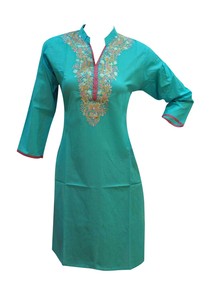

Ladies Kurta Style Ladies Kurta Neck Design Images Style Neck Designs Collection Images Photos
 
Ladies Kurta Style Ladies Kurta Neck Design Images Style Neck Designs Collection Images Photos
Ladies Kurta Style Ladies Kurta Neck Design Images Style Neck Designs Collection Images Photos 

Pakistani Ladies Kurta Ladies Kurta Neck Design Images Style Neck Designs Collection Images Photos

Pakistani Ladies Kurta Biography

Source:- Google.com.pk 

Pakistani dressing has similarities with Indian dressing because of pre-independence culture which was shared by these nations for thousand years but the religious factor was always there which makes a difference. Traditional Pakistani dressing also shares similarities between the ethnic groups of central Asia and ethnicities of the Iranian plateau such as the Turkic ethnic groups and Iranian ethnic groups , that have been separate from the cultures of modern day Pakistan during the Durand agreement between Afghanistan and the British raj. The shalwar kameez is the national dress of Pakistan and is worn by men and women in all four provinces Punjab, Sindh, Baluchistan, Khyber Pakhtoonkhwa and FATA in the country and in Azad Kashmir. Each province has its own style of wearing the Shalwar Qameez. Pakistanis wear clothes range from exquisite colors and designs to the type of fabric (silk, chiffon, cotton, etc.). 
In regional clothing, Balochi people wear shalwar kameez of thick cloth with very wide shalwar to prevent themselves from the hot wind of dry Sulaiman Range and Kharan Desert. They wear Balochi turban made of a very long cloth, often in white color to prevent their head from sun rays. Sindhi people wear shalwar kameez with traditional Sindhi cap and Ajrak of beautiful designs which are made locally. Punjabi men wear simple shalwar kameez, Kurta Shalwar and Dhoti kurta according to Punjabi climate. Turban of a thin cloth is also used with Shalwar Kameez especially in rural areas of Punjab where it is called Pagri. Khussa is also used with Dhoti Kurta. In Pashtun dress, people wear traditional Peshawari Chappalin feet and Pakul with Shalwar kameez. Kashmiri people use Pheran, Shahmina, Shahtoosh and Jamavar which makes them warm in the cold climate of Kashmir. A traditional kurta consists of rectangular fabric pieces with perhaps a few gusset inserts, and is cut so as to leave no wasted fabric. The cut is usually simple, although decorative treatments can be elaborate.

The sleeves of a traditional kurta fall straight to the wrist; they do not narrow, as do many Western-cut sleeves. Sleeves are not cuffed, just hemmed and decorated. The front and back pieces of a simple kurta are also rectangular. The side seams are left open for 6-12 inches above the hem, which gives the wearer some ease of movement. The kurta usually opens in the front; some styles, however, button at the shoulder seam. The front opening is often a hemmed slit in the fabric, tied or buttoned at the top; some kurtas, however, have plackets rather than slits. The opening may be centered on the chest, or positioned off center.

A traditional kurta does not have a collar. Modern variants may feature stand-up collars of the type known to tailors and seamstresses as "mandarin" collars. These are the same sort of collars seen on achkans, sherwanis, and Nehru jackets. Indian subcontinent has a very popular styling of Mukatsari kurta (getting its origin from the province of Mukatsar in Punjab (India) which is famous for its slim fitting cuts and smart fit designs.  It is very popular among young politicians. 

Kurtas are typically fastened with tasseled ties, cloth balls and loops, or buttons. Ready-made kurtas often avoid the use of horn buttons, in deference to Hindu sentiments; such buttons are frequently made from cow or buffalo hooves or horns. Buttons are often wood or plastic. Kurtas worn on formal occasions might feature decorative metal buttons, which are not sewn to the fabric, but, like cufflinks, are fastened into the cloth when needed. Such buttons can be decorated with jewels, enameling, and other traditional jewelers' techniques.
Pakistani Ladies Kurta Ladies Kurta Neck Design Images Style Neck Designs Collection Images Photos
 
Pakistani Ladies Kurta Ladies Kurta Neck Design Images Style Neck Designs Collection Images Photos
 
Pakistani Ladies Kurta Ladies Kurta Neck Design Images Style Neck Designs Collection Images Photos
Pakistani Ladies Kurta Ladies Kurta Neck Design Images Style Neck Designs Collection Images Photos 

Ladies Kurtas Ladies Kurta Neck Design Images Style Neck Designs Collection Images Photos

Ladies Kurtas Biography

Source:- Google.com.pk 

All the people especially young girls love new fashion. They always focus on their favorite things and latest kurta trend. All the famous fashion designers are doing so many experiments in order to give you beauty. They create changes from that you can look stylish and gorgeous easily. Pakistani ladies kurta styles for women are made according to latest fashion. With these dresses every girl can make her personality prettier than before. As we all know that women are very conscious about their beauty and style. They face so much difficulty in choosing their outfits. With the passage of time the designs of dresses are changed. Every year you find lots of variation in seasonal wears. As the dresses of winter are totally change from that of summer. Stylish kurta design for modern girls contain a huge series of top Pakistani clothing brands. These brands are working hard for the growth of our fashion industry. They produce unique styles of ladies kurta for those people who want to adopt new looks. In these collections both soft as well as bright colors are added. 

Kurtas are typically fastened with tasseled ties, cloth balls and loops, or buttons. Ready-made kurtas often avoid the use of horn buttons, in deference to Hindu sentiments; such buttons are frequently made from cow or buffalo hooves or horns. Buttons are often wood or plastic. Kurtas worn on formal occasions might feature decorative metal buttons, which are not sewn to the fabric, but, like cufflinks, are fastened into the cloth when needed. Such buttons can be decorated with jewels, enameling, and other traditional jewelers' techniques.South Asian tailors command a vast repertoire of methods, traditional and modern, for decorating fabric. It is likely that all of them have been used, at one time or another, to decorate kurtas. However, the most common decoration is embroidery. Many light summer kurtas feature Chikan embroidery, a speciality of Lucknow, around the hems and front opening. This embroidery is typically executed on light, semi-transparent fabric in a matching thread. The effect is ornate but subtle. 

Ladies kurtas blouses, among with leggings are most popular in India, Pakistan, Singapore and Malaysia. Especially 46 inch long length kurta are popular in 2013. Major production of regular wear ladies kurta are at Mumbai, Delhi, Ahemdabad India. Modern leggings are typically made from a blend of lycra fabrics and manufactured in city of India known as Tirupur.In India, Kurta is a very popular dress among the political class. Almost all the politicians are seen wearing a crisp white kurta made from khadi. Kurta also reflects India's culture and tradition. On any auspicious day or festivals, people are seen wearing colorful kurtas. Sometimes, kurtas having collars are also worn.A traditional kurta consists of rectangular fabric pieces with perhaps a few gusset inserts, and is cut so as to leave no wasted fabric. The cut is usually simple, although decorative treatments can be elaborate. The sleeves of a traditional kurta fall straight to the wrist; they do not narrow, as do many Western-cut sleeves. Sleeves are not cuffed, just hemmed and decorated.

The front and back pieces of a simple kurta are also rectangular. The side seams are left open for 6-12 inches above the hem, which gives the wearer some ease of movement. The kurta usually opens in the front; some styles, however, button at the shoulder seam. The front opening is often a hemmed slit in the fabric, tied or buttoned at the top; some kurtas, however, have plackets rather than slits. The opening may be centered on the chest, or positioned off center. A traditional kurta does not have a collar. Modern variants may feature stand-up collars of the type known to tailors and seamstresses as "mandarin" collars. These are the same sort of collars seen on achkans, sherwanis, and Nehru jackets.

Indian subcontinent has a very popular styling of Mukatsari kurta (getting its origin from the province of Mukatsar in Punjab (India)) which is famous for its slim fitting cuts and smart fit designs. It is very popular among young politicians.Imported kurtas were fashionable in the United States in the 1960s and 1970s, as an element of hippie fashion, fell from favor briefly, and are now again fashionable. South Asian women may also wear this Western adaptation of South Asian fashion. Formal kurtas are usually custom-made by South Asian tailors, who work with the fabric their customers bring them. South Asians overseas and Westerners, can buy them at South Asian clothing stores or order them from web retailers.
Ladies Kurtas Ladies Kurta Neck Design Images Style Neck Designs Collection Images Photos
 
Ladies Kurtas Ladies Kurta Neck Design Images Style Neck Designs Collection Images Photos